
About

October 2012 update
Although Virginia Tech has no plans to build in the woods in the near future, they’re not safe yet! Read more about our efforts to permanently protect this rare urban forest.

  1. Description of Stadium Woods
  2. Confirmation of White Oak Ages
  3. History of Opposition against the Building Location in Stadium Woods
  4. Meeting with Athletics and University Planning (December 15, 2011)
  5. President Steger Walks through Stadium Woods
  6. President Steger Appoints a Committee to Study Stadium Woods
  7. Uniqueness of Stadium Woods among Old Growth White Oak Forests in the East
  8. Groups that oppose building in Stadium Woods
  9. Additional links

This overview of Stadium Woods was written by Virginia Tech Forestry professor Dr. John Seiler.

Description of Stadium Woods

Figure 1. Stadium Woods outlined in red on the Virginia Tech campus, Blacksburg, Virginia.

Figure 1. Stadium Woods outlined in red on the Virginia Tech campus, Blacksburg, Virginia.

Stadium Woods is an approximately an 11.3 acre wooded section found adjacent to the east side of Lane Stadium on the Virginia Tech campus.  It is approximately a rectangle 2000 feet long (running north/south) and 300 feet wide (Figure 1).  The 11.3 acre estimate (with a precision of 1/563) is based on a ground survey of the area which includes forest floor and understory and was conducted by Dr. Mike Aust (a forest survey expert at Virginia Tech) and John Seiler.  This ground based survey excluded any area that is mowed regularly.  An estimate of 15 acres has been widely reported and this area is an estimate from above the tree canopy using aerial imagery and includes overhanging tree canopy and area on the east side of the woods which is mowed regularly.
Figure 2.  Diameter distribution of trees greater than 11 inches in Stadium Woods. The distribution found is indicative of an uneven-aged old growth stand.

Figure 2. Diameter distribution of trees greater than 11 inches in Stadium Woods. The distribution found is indicative of an uneven-aged old growth stand.

The age structure of the area is an unbalanced, uneven-aged stand with a large amount of coarse woody debris and standing snags indicative of old-growth forest (Figure 2 and 3) (Oliver and Larson, 1996). There are approximately 450 trees per acre over 4 inches in dbh. Each acre contains three to five white oak trees over 250 years old, and these large trees make up a significant percentage of the overstory. In all of Stadium Woods, there are 56 trees in total (including 46 white oaks) over 3 feet in dbh (two are large standing dead snags).

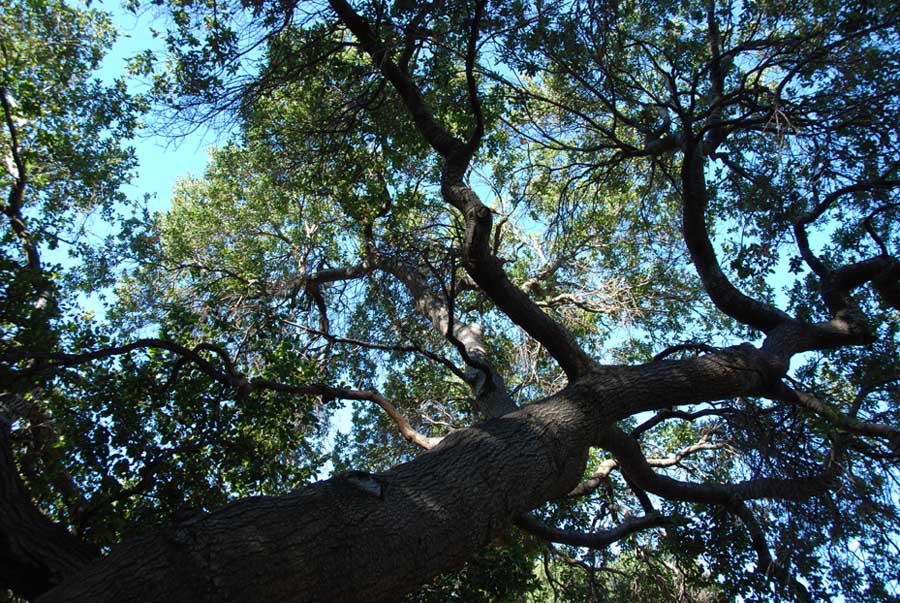
Figure 3. Views of Stadium Woods. Upper right photo shows Virginia Master Naturalists at work inventorying the forest.

Figure 3. Views of Stadium Woods. Upper right photo shows Virginia Master Naturalists at work inventorying the forest.


The mid-story and gaps in the old white oak canopy are composed primarily of rapidly growing black oak (Quercus velutina Lam.), black cherry (Prunus serotina Ehrh.), sweet cherry (Prunus avium L.), and red maple (Acer rubrum L.). The understory is composed of blackhaw (Viburnum prunifolium L.), sassafras (Sassafras albidum (Nutt.) Ness.), serviceberry (Amelanchier arborea Michx f.) Fern.), choke cherry (Prunus virginiana L.), blackgum (Nyssa sylvatica (Marsh.)), and flowering dogwood (Cornus florida L.). There is also a significant amount of invasive species in the understory, including privet (Ligustrum spp.), oriental bittersweet (Celastrus orbiculatus Thunb.), and multiflora rose (Rosa multifloraThunb. Ex Murr.). Simpson Index of tree species diversity range from over 0.9 (very high diversity) to 0.4 (low diversity) depending on the location in Stadium Woods. Over 55 species of birds have been documented frequenting Stadium Woods, including many neotropical bird species (survey conducted by New River Valley Bird Club).

Confirmation of White Oak Ages

Scattered throughout Stadium Woods, The Grove, in front of the Vet School, and other parts of campus are large numbers of white oak trees over 3 feet in diameter. These trees are remnant trees left from many previous disturbances that have taken place in and around the campus. Other tree species of this size are rarely found, and when they exist, they are in generally very poor health (e.g., large black oak on north side of Southgate Drive across from dairy barns). This is because in the eastern U.S., white oak can live longer and reach a greater size (5 feet in diameter and 100 feet tall) than most other species. White oak is known to live over 600 years (DeWitt and Derby 1955); therefore, remnant very large trees are typically white oak. The data base of old trees known as the “OLDLIST” maintained by dendrochronologist and ecologist Dr. Neil Pederson lists a white oak of 464 years in Buena Vista, Virginia. Of particular interest to Stadium Woods is a 1864 Confederate Civil War map for Montgomery County, Virginia (Figure 4). In the immediate Blacksburg, Virginia area are two homes labeled as Col. Preston (now known as Solitude) and Preston (now known as Smithfield Plantation) orienting off these homes and the town of Blacksburg shows a patch of woods on a hill which we now call Stadium Woods.

Figure 4. Stadium Woods shown on 1864 Confederate map of Blacksburg, Va area.

Figure 4. Stadium Woods shown on 1864 Confederate map of Blacksburg, VA area. From surveys and reconnaissances by Liut. (sic) C.S. Dwight Engr. Corps P.A. made under direction of Capt. A.H. Campbell Engr. Corps P.A.C.S. Confederate States of America. Army. Dept. of Northern Virginia. Chief Engineer's Office. 1864.

Most of the large white oaks on the Virginia Tech campus are in the same cohort and are roughly the same age. Several trees in The Grove that have died and are of similar size to those found in Stadium Woods had ring counts over 330 years. One tree aged by Dr. Jeff Kirwan in Stadium Woods was estimated at 305 years. His count was carefully conducted using a magnifying glass and razor blade to clean wood. The tree was hollow, so an extrapolation was utilized to estimate the total age.

On January 6, 2012, Drs. John Seiler and Jay Sullivan, used an increment borer to take cores from three 40-inch dbh trees in Stadium Woods.  The trees are on the immediate footprint of the planned practice facility.  Because of their large size, we were still not able to reach the center of the trees.  Tree number 101 in which the first 13.75 inches of radius was obtained (6.25 inches from center where we hit rot) was dated back to 1773, when the tree at that time was 12.5 inches in diameter (Appendix 1).  Extrapolating the average growth rate over the 238-year-old core to the center of the tree estimates it to be 346 years old, meaning it may have sprouted in the year 1665.  A second core from tree 101 collected on January 16, 2012 on the opposite side of the tree yielded a confirmed minimum age of 273 years.   The longest core of 18 inches (very close to center) collected from tree number 65 was aged at 232 years, or back to the year 1764.  The final tree number 37 dates back to 1801 or is 210 years old at a point where it is still 6.25 inches short of its center estimating it to be 309 years old. On March 9, 2012, Mr. John Kidd and John Seiler cored tree 175 (41 inch diameter) and obtained a core sample with 314 rings (no extrapolation) which means wood at the end of the core was formed in 1697.  This core was still short of center by 2.5 inches yielding an extrapolated age of 358. These are not the largest trees found in Stadium Woods.  Numerous individuals are over 45 inches in diameter, and five trees are over 50 inches in diameter.  Further these ages are taken approximately 4.5 feet off the ground.  White oaks can often take many years to reach 4.5 feet tall.

Figure 5. Historical events during the life of white oak tree number 101 in Stadium Woods, age 346 years.

Figure 5. Historical events during the life of white oak tree number 101 in Stadium Woods, age 346 years.

History of Opposition against the Building Location in Stadium Woods

At a January 20, 2011, Virginia Tech Arboretum Committee meeting, the members were informed by Matt Gart, University Landscape Architect, of the plans for a new indoor athletics practice facility. Mr. Gart informed the group that there were “alternative sites” but that “Beamer wanted it here” (“here” being the north end of Stadium Woods, Figure 6). The committee at the time was asked to please keep this confidential. Mr. Gart was informed that this was not a very good location and that considerable opposition was likely to occur. At an August 8, 2011, meeting of the Arboretum Committee, members were informed that the location in Stadium Woods was essentially “a done deal” and the committee was asked for remediation suggestions for the loss of tree canopy cover. In a Washington Post article published on August 7, 2011, it is very clear from Associate Director of Athletics for Internal Affairs Tom Gabbard’s comments that the building of the facility in Stadium Woods was in fact “a done deal” in the minds of the Athletic Department. The article states, “Virginia Tech’s new indoor facility will be located in a wooded area adjacent to the Hokies’ outdoor football practice fields, just beyond the north end zone of Lane Stadium. Gabbard said part of the project will involve removing 30 feet of elevation and moving approximately 80,000 cubic yards of dirt from the woods” (emphasis the author’s; the elevation according to Hugh Latimer, University Architect, is actually 38 feet). Further, a Thursday, October 27, 2011, Roanoke Times article states, “Tech Associate Director of Athletics Tom Gabbard said that a planned indoor facility, which could open as soon as 2014, will be carved out of a hillside adjacent to Tech’s football practice fields” (emphasis the author’s).

Figure 6. Proposed location of indoor practice facility in Stadium Woods as well as one alternative site mentioned in January 20, Arboretum committee meeting.

Figure 6. Proposed location of indoor practice facility in Stadium Woods as well as one alternative site mentioned in January 20, Arboretum committee meeting.

On November 3, 2011, the Arboretum Committee was asked by Associate Vice President for Facilities Michael J. Coleman (via Matt Gart) to provide an official position on the Stadium Woods location. On November 11, 2011, the Arboretum Committee sent their official “strongly opposes” position on the location of the facility in Stadium Woods (Figure 7). “Friends of Stadium Woods (FSW)” began an online petition opposed to building the facility in Stadium Woods on or around November 19, 2011. FSW had an organizational meeting in the Blacksburg Branch of Montgomery County Libraries on November 30, 2011. At this meeting, they discussed letter writing campaigns, the petition, and other strategies to make the university aware of the value of Stadium Woods and the recommendation that the facility be built in an alternate location.

On December 13, 2011, the Virginia Tech Faculty Senate voted unanimously in favor of a petition supporting the protection of Stadium Woods (Figure 9). This resolution, among other things, emphasized that Virginia Tech has publicly committed itself to value sustainability and engage in sound environmental stewardship, that Stadium Woods is designated as an “environmental greenway,” and that Stadium Woods is a living reminder of the natural history of campus and the region.

Meeting with Athletics and University Planning (December 15, 2011)

Dr. Paul Winistorfer, Dean of the College of Natural Resources and Environment (CNRE), arranged a meeting of individuals concerned about the building location (Drs. Jeff Kirwan, Eric Wiseman, and John Seiler) along with representatives from Athletics (Tom Gabbard) and University Planning (Hugh Latimer and Matt Gart). The meeting was held on December 15, 2011, in the Merryman Center followed by a walk into Stadium Woods to examine the impacted area.

Hugh Latimer began the meeting with a discussion of the history of the facility planning. The original intent was to locate the facility along Washington Street, which would then result in a string of athletic facilities beginning with Cassell Coliseum, continuing with the indoor basketball practice facility, and the yet-to-be-built indoor football practice facility. This land along Washington Street is identified in the University Master Plan as “Athletics.” Due to a sequence of events not made entirely clear in the meeting, the basketball facility was built first, next to Cassell Coliseum. It was further explained that the basketball facility was located further away from Cassell than originally planned due to fiber optic cables. This ultimately would push a football facility closer to town.

Reasoning was then given as to why the location along Washington Street was not suitable for the football practice facility. The rationale included: Dr. Steger once commented that the practice facility would not be an appropriate sort of building for Washington Street; more time would be required to move an outdoor football practice if it had to be relocated due to a change in weather; and the tennis courts would be lost. Given these reasons, Stadium Woods was then identified as the location. A discussion countering these reasons included the following: any building can be designed to look attractive; Washington Street is not a major entrance for campus; the difference in time to move a practice to the Stadium Woods location versus the Washington Street location is about 1 minute, which is very minimal considering the total amount of time it takes to suddenly relocate a practice; and new tennis courts are planned as shown in the University Master Plan.

Dr. Seiler then asked Mr. Gabbard if the actual reason why Stadium Woods was selected as the location was because “Coach Beamer wants it there.” Mr Gabbard did not answer the question. It was also asked if we could meet with Coach Beamer, and Mr. Gabbard commented “you are meeting with us.” Storm water retention was then discussed briefly. It was pointed out that moving from a land use of mature forest (Stadium Woods) to an impervious surface (new building) is a worst-case scenario for storm water planning. The Washington Street location is already a largely impervious surface requiring minimal mitigation. The claim was made that existing infrastructure located near Stadium Woods can handle the storm water and that no further land would be used for new storm water retention ponds.

There was also a discussion about the nature of the impact zone on the trees. Athletics and University Planning showed a building footprint plus 40 feet on all sides, which results in approximately 3 acres. Dr. Wiseman (Urban Forestry expert) and others stressed that this is not a fair distance from the building. Mature, large trees such as those found in Stadium Woods have root systems that require protection of a minimum of 60 feet from their trunks. The foot print shown and 3 acre number also does not include area for parking, access, or dumpsters. Further, staging areas for construction require areas typically as large as building footprints. University Planning indicated the staging for this building would be across Washington Street with access to the construction between Cassell Coliseum and the basketball practice facility. Others in the meeting questioned how staging for such a large project could be across a busy street and how large vehicles would drive between two buildings on a steep slope.

We then moved outdoors and walked through Stadium Woods discussing the ecology and pointing out the numerous centuries-old trees and structure of an old-growth forest. The meeting ended with no resolution, tasks, charges, or plans for future discussions.

President Steger Walks through Stadium Woods

At some point around December 17 or 18, 2011, University President Dr. Charles Steger visited Stadium Woods. This was reported to Dr. Seiler by Provost Dr. Mark McNamee at a meeting on January 5. Prior to this point, rumors had circulated that Dr. Steger was planning to or had visited the woods. Dr. Seiler was told that President Steger was “informed by a person of knowledge” that there were no trees older than approximately 80 years of age, which is factually incorrect. This may have led Dr. Steger to come away with being less impressed with Stadium Woods. President Steger requested University Planning to obtain an independent ecological assessment of Stadium Woods. The ecological assessment of Stadium Woods is being conducted by Biohabitats located Baltimore, Maryland. The assessment will include an analysis using UFORE, a Land Suitability Index and an in-house metric they developed for ecological assessment. UFORE is an acronym for “Urban Forest Effects” and refers to a computer model that calculates the structure, environmental effects and values of urban forests.

President Steger Appoints a Committee to Study Stadium Woods

On January 19, 2012 President Charles Steger appointed a committee to study Stadium Woods and the siting of the proposed indoor practice facility. The committee charge is found in Figure 10. It is to submit its findings no later than June 1, 2012. Rebekah Paulson of FSW was further informed by Vice President Sherwood Wilson via e-mail that the BOV would not be considering the indoor practice facility at the March 25-26, 2012 meeting.

Uniqueness of Stadium Woods among Old Growth White Oak Forests in the East

Old growth forest is defined in many ways. Most descriptions include the following characteristics: a large percentage of exceptionally old trees, standing dead trees, coarse woody debris on the forest floor, multilayered canopies, a mix of tree ages, canopy gaps where large trees have fallen, and pits and mounds from the root plates of large trees falling over. Stadium Woods, including the area that would be impacted by the proposed building, has all of these features.

No one really knows how much old growth forest exists in the U.S. A 1993 inventory of the southeastern U.S. found about 425 old growth sites across the region, totaling only one-half percent of the total forest area. The single best reference for old growth sites in the east is the on-line publication Old growth in the East: A Survey (Online Ed.) (Byrd 2006). A site highlighted in this document is a woodland found on the campus of Sweet Briar College in Amherst County, Virginia, which is described as:

“Sweetbriar College White oak Woods (Amherst County): on a flat ridge owned by the college, approximately 10 acres of White oak-mixed hardwoods-mixed herb community in which most of the dominant trees have dbhs (diameters at breast height) of 30 to 36 inches.”

The trees in Sweetbriar College’s woodland are considerably smaller than those found in Stadium Woods, yet they have been preserved and highlighted as a unique asset to their campus.

The majority of old growth forests in the east are in rugged terrain, which made them inaccessible to timber harvesting in the past, but also makes them inaccessible to a large portion of the viewing public in the present. This is part of the uniqueness of Stadiums Woods. A woodland caught between an expanding town and university – and overrun by a civil war – yet inexplicably left uncut, is remarkable indeed. Neil Pederson, a forest ecologist and old growth expert from the Tree Ring Laboratory, Lamont-Doherty Earth Observatory at Columbia University writes on January 25, 2012 about Stadium Woods:

“The uniqueness of this stand … is that it is so easily accessible to so many people. Most of the old-growth forests on the list I sent to you are found in rugged or inaccessible areas. Hiking into Sipsey Wilderness in Alabama was not too easy. So, the value here is that, with good, environmentally-conscious development, those with limited mobility can get a sense of awe about what mature forests look like. This has to be a rare thing in upland areas. The only areas I am familiar with that give people with limited access to mature forests are in national parks or wetland forests (Four Holes Swamp, SC; Congaree National Park, SC; Everglades; I would bet the Okefenokee has something similar). But because many, if not most, old white oak forests near human settlement were cut, you might have a truly rare piece of property.”

In comparison to other old growth white oak in the east, Stadium Woods may well be the single largest collection of old white oak. Dr. Pederson further commented:

“The best place that I just learned about that sounds similar [to Stadium Woods] might the Murphy Tract in WV. The site of yours sounds pretty unique…this sounds like a great find!”

The Murphy Tract contains only 21 white oaks over 340 years old (source). Stadium Woods with 56 trees over 36 inches in diameter may contain many more than this.

Other old growth white oak forests that are frequently mentioned in the eastern U.S. are Dysart woods in Ohio, which contains a white oak 51.6 inches in diameter (Stadium woods has 5 trees over 50 inches); Cook Forest State Park in Pennsylvania, which has a white oak listed at 44.3 inches in diameter; and Lilley Cornett Woods in Kentucky, which lists a 42 inch diameter white oak. A large number of trees in Stadium Woods fall into this size range.

The best source of information on old trees in the eastern U.S is found in the on-line Eastern OLDLIST. This list is a database of ancient trees and their ages. The purpose of the list is to identify and highlight maximum ages for species in eastern North America. The list only contains well-verified or well-documented tree ages. The 13 oldest white oak trees listed on the Eastern OLDLIST range from 289 to 464 years with the average being 365 years. Many trees in stadium woods would easily fall into this list of some of the oldest white oaks in the U.S.

Lawrence Tucei, the Live Oaks Project Director for the Native Tree Society, commented on Stadium Woods January 27, 2012:

“Areas with old trees such as these should be protected. There are many White Oaks in North America in the 50 – 70 year old range but the 200-500 year old trees are extremely rare.”


Groups that oppose building in Stadium Woods:

Wildlife inventory
Photo Gallery


No comments yet.

Leave a Reply